In TIS, patient data
is not sent to an external AI service.
A breach disclosed in November 2026 spread from an AI infrastructure provider to the data of other companies. With health data, the consequences of this kind of risk are far more serious.
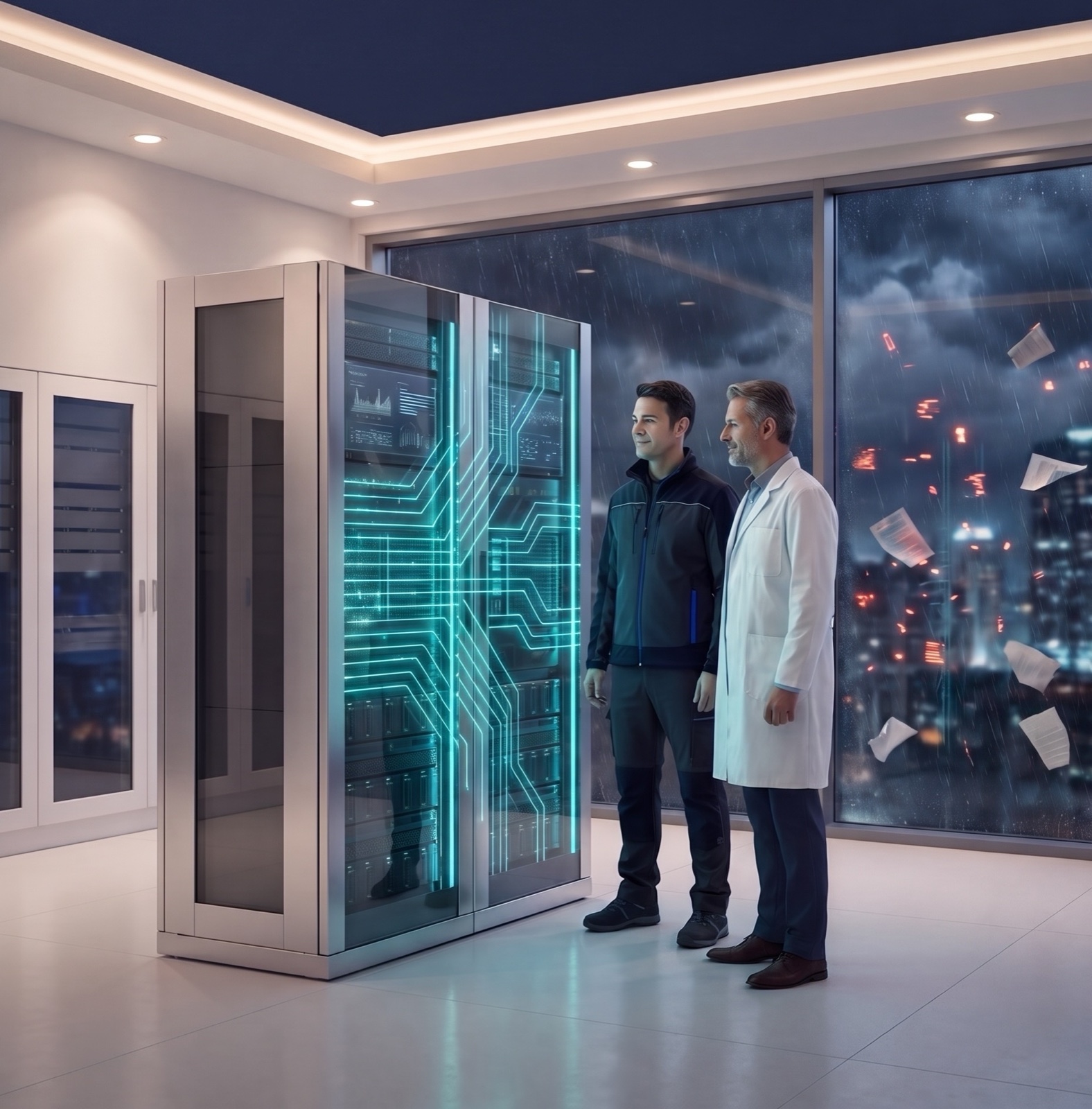
According to news reports, attackers reached the development environment of the AI infrastructure provider Fireworks AI through a third-party cloud provider (The Hacker News). Uber notified close to 150,000 drivers that their personal and driver's licence information had been stolen in the breach at Fireworks AI (TechCrunch). Notion confirmed that the AI chat transcripts of Notion AI customers who used a specific feature had been taken (TechCrunch).
With health data, the risk is more serious
A hospital may pass its conversation with a patient, and an insurer its conversation with a customer, through a general-purpose language model that belongs to someone else. That conversation may leak one day. The model's answers may also change without the institution's knowledge and lead both sides in the wrong direction. In that case, the question of who is responsible may remain unanswered.
Work this confidential requires knowing every component in use and having command of the system's limits.
MINA is built from three parts
This is why we develop MINA as our own model. MINA is built from three parts.
- Data warehouse: Data moves layer by layer from its raw form to a cleaned and structured form. Medical reference texts, clinical guidelines, regulations, SUT, drug information and the literature are each indexed separately.
- Agent architecture: For each question, the agent decides for itself which of the tools built for regulations, SUT, drugs and the literature to use.
- Chain: The question, the tool calls and the sources are linked in a chain that turns into the answer. The answer comes with the source it is based on.
In our clinical platform TIS
In our clinical platform TIS, the model and tool calls run without going to an external AI service, and patient data is not sent to an external AI service. MINA's behaviour also changes only through a release that passes our measurement gate.
Today it is possible to write a working application with AI in a few weeks. Building an infrastructure that will carry health data takes engineering, discipline and time.
You can read how MINA was built on the MINA page. If you would like to see it in your own institution, you can request a POC.
Related: TIS for physicians · TIS for hospitals
News sources: The Hacker News, 10 November 2026; TechCrunch, 12 November 2026; TechCrunch, 16 November 2026. Information about the companies is given as reported in these articles.
SSS
Is patient data sent to an external AI service in TIS?
No. In our clinical platform TIS, the model and tool calls run without going to an external AI service, and patient data is not sent to an external AI service.
What parts is MINA built from?
MINA is built from a data warehouse, an agent architecture and a chain. In the data warehouse, medical reference texts, clinical guidelines, regulations, SUT, drug information and the literature are each indexed separately. For each question, the agent decides for itself which tool to use, and the answer comes with the source it is based on.
How does MINA's behaviour change?
MINA's behaviour changes only through a release that passes our measurement gate.
